Application
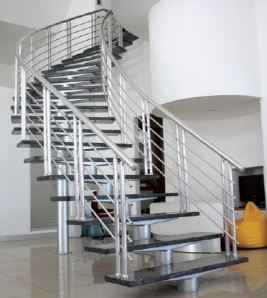
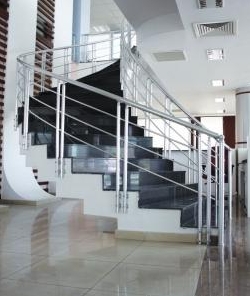
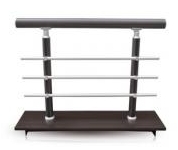
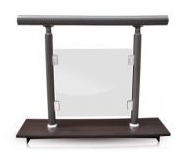
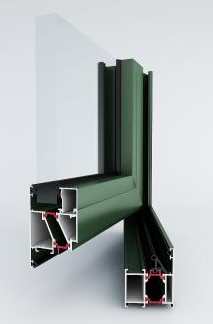
BA 50 is a system of aluminum profiles and accessories for the production of balustrades and railings.
Its key features are the ease of prefabrication and installation. Unlike other similar products available on the market, all connections between elements are made using rivets and screws. This significantly increases installation speed and also allows the entire structure to be disassembled without damage if necessary.
Another characteristic feature of the system is its versatility. A wide range of profiles for posts and handrails, along with accessories, allows for creating angles and curves within the structure without the need for custom-made elements. Production and installation do not require specialized equipment — a basic saw, drill, and riveter are sufficient.
The most important feature distinguishing this product from other solutions on the market is the base material — aluminum. Aluminum profiles are relatively lightweight yet durable, easy to cut and process precisely. They can also be powder-coated in hundreds of colors from the RAL palette and beyond. Additionally, aluminum profiles can be anodized to achieve, for example, the appearance and texture of stainless steel.
Application
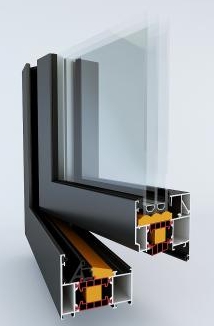
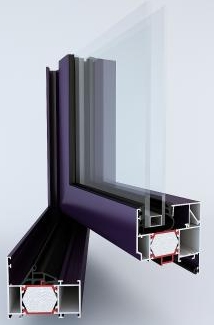
The TM 77HI Windows system is a new, innovative solution that provides excellent thermal and acoustic insulation, as well as protection against wind and water.
The TM 77HI Windows system allows the following constructions:
Technical Description
The TM 77 HI Windows system consists of two aluminum sections separated by insulating strips.
Installation depth:
Additional Benefits
Technical Characteristics
| Technical Parameter | TM 77 HI |
| Air Permeability | AE 900–1200 |
| Water Tightness | RE 900–1200 |
| Heat Transfer Coefficient | Uf = 1.1–1.5 W/m²K PN-EN ISO 10077-2:2005 |
| Acoustic Insulation | Rw = 34–48 dB PN-B-02151-3:1999 |
Application
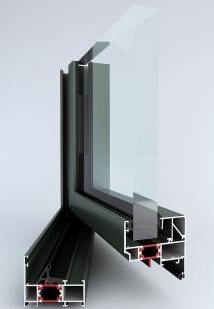
The TM 74 1.0 system is designed for constructing windows and external display units with high thermal insulation properties, intended for external installation in residential, public, and industrial buildings.
The system allows the following constructions:
Technical Description
The TM 74 1.0 system consists of three-chamber aluminum profiles with a thermal break.
Installation depth:
The TM 74 1.0 system allows the use of various types of infills (insulated glass units, including triple-glass packages 13–57 mm thick).
Dimensions of sashes, mullions, and transoms should be determined based on structural calculations, taking into account wind loads, the strength characteristics of aluminum profiles, type of glazing, and permissible deflection of window and balcony door elements. Maximum width of casement and tilt-and-turn sashes is 1600 mm, height 2500 mm, maximum weight 130 kg. Additional profiles allow constructing combined windows with various functions arranged in any configuration.
Additional Benefits
The system allows the construction of large-size windows due to the use of reinforced profiles externally and internally. Angular profiles enable assembling constructions at any angle. A wide variety of specialized profiles allows manufacturing windows with excellent thermal performance and assembling different types of windows together. The aesthetic value of the construction is enhanced by high-quality surface finishes: powder coating, wood-like colors, and anodizing.
Key Features
The TM 74 1.0 system enables modern window solutions in various configurations. It allows installation in façade systems. Windows of the TM 74 1.0 system enable optimal construction of building elevations, considering user requirements for functionality, aesthetics, and durability. Thermal insulation of the profiles helps optimize building operating costs. The suitability for use in construction is confirmed by the ITB Technical Approval AT-15-4695/2007.
Technical Parameters
| Parameter | Standard | Value |
| Air permeability | PN-EN 12207 | Class 4 |
| Water tightness | PN-EN 12208 | E1050 |
| Deformation | PN-EN 12210 | C4 |
| Acoustic insulation | PN-EN ISO 140-3 | 30–44 dB |
| Thermal insulation | Uf = 1.68–1.99 W/m²K | |
| Corrosion category | PN-EN ISO 12944-2:2001 | C1, C2, C3, C4 |
Application
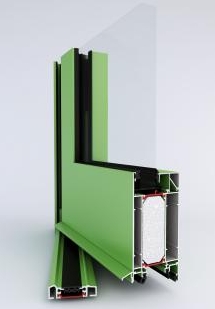
The TM 74 1.0 Door system is designed for constructing doors with high thermal and acoustic insulation as well as aesthetic qualities, intended for external installation in residential, public, and industrial buildings.
The system allows for the following constructions:
Technical Description
The system consists of three-chamber aluminum profiles with a thermal break.
Installation depth:
The TM 74 system allows the use of various types of infills (insulated glass units, including triple-glass packages 13–46 mm thick, as well as various opaque infills).
Maximum sash dimensions:
The system features a unique internal chamber division that provides excellent thermal properties.
Additional Benefits
The profile range allows constructing doors with a distinct character. Profiles of various widths enable the use of a full range of modern hardware, as well as custom handles or pull bars. The profile width allows for concealed hinges and remote-controlled locks.
Key Features
TM 74 1.0 doors are a modern solution suitable for a wide range of users. The unique air circulation system within the profiles enables construction with high thermal insulation. Full RAL palette painting and wood-like coatings allow giving the doors an individual character. Suitability for use in construction is confirmed by tests carried out in notified laboratories.
Technical Parameters
| Parameter | Standard | Value |
| Air permeability | PN-EN 12207 | Class 3 |
| Water tightness | PN-EN 12208 | A5 |
| Deformation | PN-EN 12210 | C3 |
| Acoustic insulation | PN-EN ISO 140-3 | 30–40 dB |
| Thermal insulation | Uf = 1.9 W/m²K | |
| Corrosion category | PN-EN ISO 12944-2:2001 | C1, C2, C3, C4 |
Application
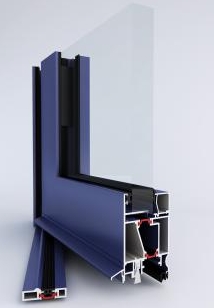
The TM 62 2.1 system is designed for constructing thermally insulated external windows and display units intended for residential, public, and industrial buildings.
The system allows for the following constructions:
Technical Description
The TM 62 2.1 system consists of three-chamber aluminum profiles with a thermal break.
Installation depth:
The system allows the use of various types of infills (insulated glass units, including triple-glass packages with a thickness of 13–57 mm).
Sash, mullion, and transom dimensions should be determined based on structural calculations, considering wind loads, the strength characteristics of aluminum profiles, type of glazing, and allowable deflections of window and balcony door elements. Maximum sash width for casement and tilt-and-turn windows is 1600 mm, maximum height 2500 mm, maximum weight 130 kg. Additional profiles allow creating combined windows with different functions in various layouts.
Additional Benefits
The system allows constructing large-sized structures thanks to reinforced profiles both internally and externally. Sofline profiles enable creating windows with rounded edges. Corner profiles allow building window sets at any angle. A wide variety of specialized profiles enables economical fabrication of appropriately sized windows and flexible combination of different window types. The aesthetic appeal of the constructions is highlighted by high-quality surface finishes: powder coating in wood-like colors and anodizing. Products are available in any RAL color, enhancing both functional and aesthetic value.
Key Features
The system supports modern window construction solutions in various configurations and layouts. It allows the installation of windows in façade systems.
TM 62 2.1 windows enable optimal execution of building elevations, considering user needs for functionality, aesthetics, and durability. Solutions allow giving the building an individual character and realizing architectural visions.
The suitability for use in construction of products under the name “YAWAL® TM 62 2.1 windows and balcony doors made from aluminum profiles with a thermal break” is confirmed by the Technical Approval ITB AT-15-4312/2006.
Technical Parameters
| Parameter | Standard | Value |
| Air permeability | PN-EN 12207 | Class 4 |
| Water tightness | PN-EN 12208 | E1050 |
| Deformation | PN-EN 12210 | C4 |
| Acoustic insulation | PN-EN ISO 140-3 | 30–44 dB |
| Thermal insulation | Uf = 2.02–2.51 W/m²K | |
| Corrosion category | PN-EN ISO 12944-2:2001 | C1, C2, C3, C4 |
| Resistance to burglary | PN-ENV 1627:2006 | Class 2 and 3 |
Application
The TM 62 2.1 Door system is designed for constructing thermally and acoustically insulated, aesthetically appealing doors intended for external installation in residential, public, and industrial buildings.
The system allows for the following constructions:
Technical Description
The system consists of three-chamber aluminum profiles with a thermal break.
Installation depth:
The TM 62 system allows the use of various types of infills.
Maximum sash dimensions:
Additional Benefits
The range of profiles enables the construction of doors with a unique character. Profiles of varying widths allow the use of a full range of modern fittings, as well as custom handles or pull bars. The profile widths accommodate concealed hinges and remote-controlled locks.
Technical Parameters
| Parameter | Standard | Value |
| Air permeability | PN-EN 12207 | Class 4 |
| Water tightness | PN-EN 12208 | E1050 |
| Deformation | PN-EN 12210 | C4 |
| Acoustic insulation | PN-EN ISO 140-3 | 30–44 dB |
| Thermal insulation | Uf = 2.02–2.51 W/m²K | |
| Corrosion category | PN-EN ISO 12944-2:2001 | C1, C2, C3, C4 |
| Resistance to burglary | PN-ENV 1627:2006 | Class 2 and 3 |
Application
The PI 50N OUTWARD system is designed for constructing modern, high-performance external glazing units that require thermal and acoustic insulation, including various types of windows, display units, and balcony doors with outward-opening sashes, intended for residential, public, and industrial buildings.
The system allows for the following constructions:
Technical Description
The PI 50N OUTWARD system consists of three-chamber aluminum profiles with a thermal break.
Installation depth:
The system allows the use of various types of infills, including insulated glass units, including triple-glass units with thicknesses of 13–40 mm.
Maximum sash dimensions:
Additional Benefits
The aesthetic value of the constructions is enhanced by the high-quality finish of the profiles: powder coating, wood-like colors, and anodizing.
Key Features
The system allows the realization of modern window solutions in various configurations and layouts. It supports integration into facade systems and features an original triple-seal system.
PI 50N OUTWARD windows enable optimal facade construction while meeting user requirements for functionality, aesthetics, and durability. The system allows giving buildings a unique character and realizing architectural visions in a cost-effective manner. The variety of fittings and two mounting options for hinges provide versatility.
The suitability of the system for construction use has been confirmed by tests conducted in notified laboratories.
Technical Parameters
| Parameter | Standard | Value |
| Air permeability | PN-EN 12207 | Class 4 |
| Water tightness | PN-EN 12208 | E750 |
| Deformation | PN-EN 12210 | C4 |
| Acoustic insulation | PN-EN ISO 140-3 | 30–40 dB |
| Thermal insulation | Uf = 2.3–2.4 W/m²K | |
| Corrosion category | PN-EN ISO 12944-2:2001 | C1, C2, C3, C4 |
Application
The PI 50N system is designed for constructing windows and insulated external glazing units for residential, public, and industrial buildings. The system allows for the construction of the following types of windows:
Technical Description
The PI 50N system consists of three-chamber aluminum profiles with a thermal break.
Installation depth:
Frame: 50 mm
Sash: 59 mm
The system allows the use of various types of infills, including insulated glass units, including triple-glass units with thicknesses from 13 to 40 mm.
Dimensions of sashes, mullions, and transoms should be determined based on structural calculations, taking into account wind loads, the strength characteristics of aluminum profiles, type of glazing, and allowable deflections of window and balcony door elements. Maximum width of side-hung and tilt-and-turn sashes is 1500 mm, height 2400 mm, maximum weight 130 kg. Additional profiles allow for combined windows with different functions arranged in any layout.
Additional Benefits
The system allows for large constructions due to reinforced profiles used both externally and internally. Angle profiles enable the creation of window sets at any angle. A wide variety of specialized profiles allows for windows with excellent thermal performance and flexible configuration. The aesthetic quality is enhanced by high-quality surface finishes: powder coating, wood-like colors, and anodizing.
Key Features
The system supports modern window designs in various configurations and layouts. It allows integration with facade systems and features an original triple-seal system. PI 50N windows enable optimal facade construction with respect to functionality, aesthetics, and durability, allowing for architectural individuality and cost-effective solutions.
The suitability of the product “YAWAL® PI 50 windows and balcony doors made from aluminum profiles with thermal break” for construction is confirmed by ITB Technical Approval AT-15-4201/2006.
Technical Parameters
| Parameter | Standard | Value |
| Air permeability | PN-EN 12207 | Class 4 |
| Water tightness | PN-EN 12208 | E750 |
| Deformation | PN-EN 12210 | C4 |
| Acoustic insulation | PN-EN ISO 140-3 | 30–40 dB |
| Thermal insulation | Uf = 2.3–2.4 W/m²K | |
| Corrosion category | PN-EN ISO 12944-2:2001 | C1, C2, C3, C4 |
The PBI 50N system is designed for partitions and constructions that do not require thermal insulation, suitable for both interior and exterior applications such as doors—including swing doors—windows—including pass-through windows—non-load-bearing partition walls, display windows, and booths.
With a profile depth of 50mm, it is one of the strongest profiles in this category on the market.
Based on the PBI 50N system, smoke-tight doors and walls can also be constructed. The smoke-tight properties of doors in the PBI 50N and PBI 40E systems have been certified under a common approval.
Building elements made from the PBI 50N system are intended for use in residential, public, and industrial buildings as internal partitions.
Doors and walls in the PBI 50N system can also be used as external partitions only in cases where thermal insulation or watertightness is not required, and static calculations account for wind loads.
Technical Description
The PBI 50N system consists of single-chamber aluminum profiles without thermal insulation, with a characteristic depth of 50mm. Door frames and leaves are 50mm, and window leaves are 57mm. Various types of transparent and opaque infills with thicknesses from 4 to 45mm can be used.
Maximum construction dimensions achievable with this system:
Where:
H – door height in clear opening
W – door width in clear opening
Additional Benefits
The system incorporates technological solutions transferred from the previously introduced “warm” PI 50N system with rebated hinges. Accessories and fittings are standardized across these systems. This unification allows for faster construction and reduces the risk of errors during prefabrication. The aesthetic value of constructions is enhanced by high-quality surface finishing: powder coating and anodizing. Products can be painted in any RAL color.
Key Features
The PBI 50N system enables the creation of doors—including swing doors—windows—including pass-through windows—partition walls, and cash partition walls. Constructions can be made in various configurations and layouts, including walls at 90° and 135° angles. With a profile depth of 50mm, it is among the strongest profiles in its category. The wide range of profiles, including reinforced mullions, allows for large-scale constructions.
All types of glass available on the market can be used as infills, including single, insulated, or bulletproof glass, made of clear, absorptive, patterned, or reflective glass. Additionally, infills can be aluminum panels, furniture panels, gypsum boards, or polycarbonate sheets. Maximum infill thickness is 45mm.
Partitions and doors of the PBI 50N and PBI 40E systems are covered by a single technical approval according to the European Union document ETAG 003, specifying intended use, scope, testing methods, and classifications.
Technical Parameters
| Parameter | Value |
| Operating force | Class 2 PN-EN 12217 |
| Resistance to vertical static loads | Class 2 PN-EN 947 |
| Resistance to static torsion | Class 2 PN-EN 948 |
| Resistance to impact by hard body | Class 2 PN-EN 950 |
| Resistance to impact by soft and heavy body | Class 2 PN-EN 949 |
| Resistance to repeated cyclic opening and closing (mechanical durability) | Class 5 PN-EN 12400 |
| Acoustic insulation | Rw 22-32 dB |
| Air permeability [a ≤1,0 m³/(m·h·daPa²/³)] | Class 2 PN-EN 1227 |
| Smoke tightness | Sa Sm PN-EN 13501-2 |
| Profile corrosion resistance | C1-C4 PN-EN 12944-2 |
The PBI 50N system is designed for partitions and constructions that do not require thermal insulation, suitable for both interior and exterior applications such as doors—including swing doors—windows—including pass-through windows—non-load-bearing partition walls, display windows, and booths.
With a profile depth of 50mm, it is one of the strongest profiles in this category on the market.
Based on the PBI 50N system, smoke-tight doors and walls can also be constructed. The smoke-tight properties of doors in the PBI 50N and PBI 40E systems have been certified under a common approval.
Building elements made from the PBI 50N system are intended for use in residential, public, and industrial buildings as internal partitions.
Doors and walls in the PBI 50N system can also be used as external partitions only in cases where thermal insulation or watertightness is not required, and static calculations account for wind loads.
Technical Description
The PBI 50N system consists of single-chamber aluminum profiles without thermal insulation, with a characteristic depth of 50mm. Door frames and leaves are 50mm, and window leaves are 57mm. Various types of transparent and opaque infills with thicknesses from 4 to 45mm can be used.
Maximum construction dimensions achievable with this system:
Where:
H – door height in clear opening
W – door width in clear opening
Additional Benefits
The system incorporates technological solutions transferred from the previously introduced “warm” PI 50N system with rebated hinges. Accessories and fittings are standardized across these systems. This unification allows for faster construction and reduces the risk of errors during prefabrication. The aesthetic value of constructions is enhanced by high-quality surface finishing: powder coating and anodizing. Products can be painted in any RAL color.
Key Features
The PBI 50N system enables the creation of doors—including swing doors—windows—including pass-through windows—partition walls, and cash partition walls. Constructions can be made in various configurations and layouts, including walls at 90° and 135° angles. With a profile depth of 50mm, it is among the strongest profiles in its category. The wide range of profiles, including reinforced mullions, allows for large-scale constructions.
All types of glass available on the market can be used as infills, including single, insulated, or bulletproof glass, made of clear, absorptive, patterned, or reflective glass. Additionally, infills can be aluminum panels, furniture panels, gypsum boards, or polycarbonate sheets. Maximum infill thickness is 45mm.
Partitions and doors of the PBI 50N and PBI 40E systems are covered by a single technical approval according to the European Union document ETAG 003, specifying intended use, scope, testing methods, and classifications.
Technical Parameters
| Parameter | Value |
| Operating force | Class 2 PN-EN 12217 |
| Resistance to vertical static loads | Class 2 PN-EN 947 |
| Resistance to static torsion | Class 2 PN-EN 948 |
| Resistance to impact by hard body | Class 2 PN-EN 950 |
| Resistance to impact by soft and heavy body | Class 2 PN-EN 949 |
| Resistance to repeated cyclic opening and closing (mechanical durability) | Class 5 PN-EN 12400 |
| Acoustic insulation | Rw 22-32 dB |
| Air permeability [a ≤1,0 m³/(m·h·daPa²/³)] | Class 2 PN-EN 1227 |
| Smoke tightness | Sa Sm PN-EN 13501-2 |
| Profile corrosion resistance | C1-C4 PN-EN 12944-2 |